
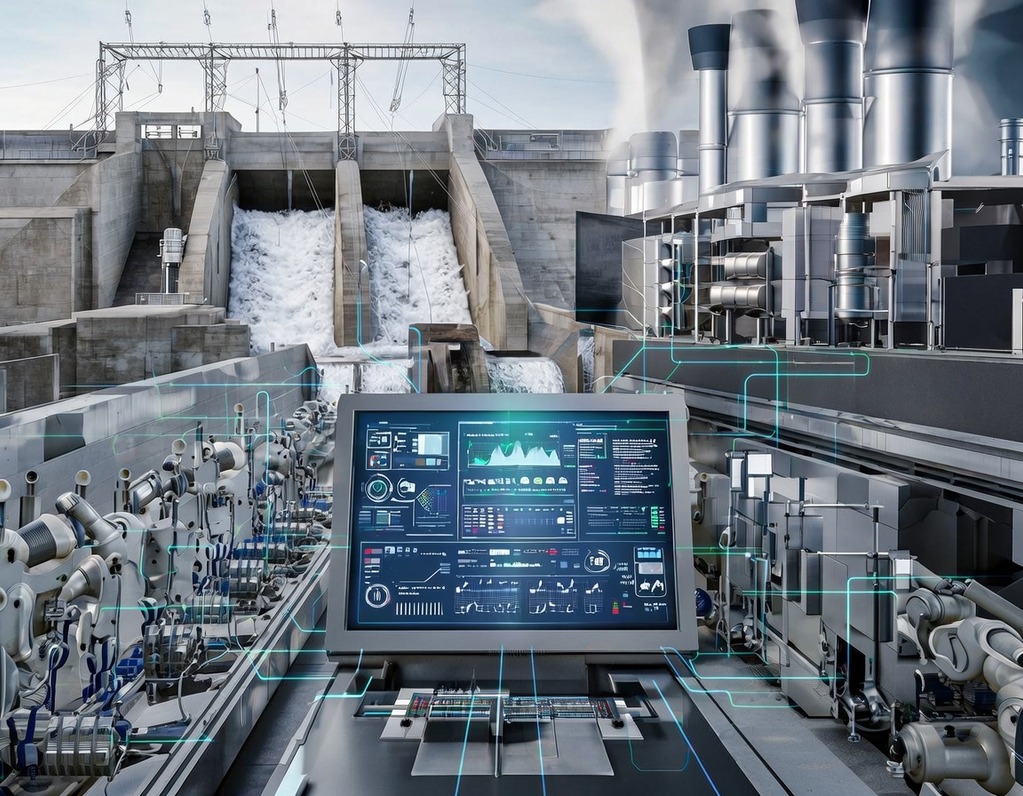
Industrial control systems are no longer designed for isolated environments; rather, they need to meet cross-industry demands. This is because today’s energy operators may manage hydropower assets, gas turbine facilities, and manufacturing operations within the same portfolio. Each of these environments runs on different physics, different failure modes, and different regulatory expectations. Yet they all share one non-negotiable requirement: reliable, precise control. Choosing the right control system partner is therefore one of the most consequential decisions a decision-maker can make. In this article, we explore how control strategies differ across hydroelectric, gas turbine, and industrial manufacturing applications. We also look at what it takes to engineer systems that perform across all of them.
How Control Systems Differ to Meet Cross-Industry Demands
Every energy environment imposes unique demands on its control system. What works perfectly in a hydroelectric plant could be dangerous in a gas turbine facility, and what is standard in oil and gas may be overkill in a manufacturing line. Understanding these distinctions is the first step toward building systems that truly perform.
Here is how control strategies adapt to different industrial environments:
Hydroelectric Power: Steady and Reactive
Hydroelectric plants are built for consistency. Their primary job is to maintain a stable power output by carefully controlling the flow of water into the turbines.
- The Goal: Maintain a smooth, unwavering grid frequency.
- How It Works: These systems operate on a constant feedback loop. They continuously measure the turbine’s physical speed. If the turbine slows down under heavy power demand, the system opens the gates to let in more water, much like how a vehicle’s cruise control presses the gas pedal when you hit a steep hill.
- The Takeaway: The controllers used here are designed specifically for stability. They excel at making smooth, calculated adjustments that prevent the system from overcorrecting.
Gas Turbines: High Speed and High Stakes
Unlike water flow, gas burning is highly volatile. Variables such as internal temperature, fuel flow, and rotational speed can change drastically within fractions of a second.
- The Goal: Manage extreme volatility in real time to prevent catastrophic equipment failure.
- How It Works: These platforms must process large volumes of operating data in milliseconds. They oversee the most dangerous phases of operation, such as ignition, load changes, and maintaining a perfectly stable combustion flame.
- The Takeaway: Because the stakes are so high, these environments absolutely require independent safety layers—these safety logics run parallel to the main control system. If conditions become dangerous, such as a sudden pressure spike, this independent system bypasses everything else to shut down the turbine safely. It is a mandatory insurance policy built directly into the machinery.
Industrial Manufacturing: Process and Throughput Optimization
In a manufacturing plant, the priority shifts entirely. You are not generating raw energy; you are focusing on process repeatability, production volume, and consistent product quality.
- The Goal: Maximize production throughput while giving executives total visibility into the operation.
- How It Works (The Workers): PLCs are rugged industrial controllers sitting right next to the machinery. They make the rapid, instantaneous decisions required to keep an assembly line moving seamlessly.
- How It Works (The Manager): A supervisory software system called SCADA (Supervisory Control and Data Acquisition) collects data from those PLCs. It translates raw machine actions into clear, visual dashboards for human operators.
- The Takeaway: By integrating PLCs and SCADA, facilities achieve a highly responsive, machine-level system while remaining fully transparent at the management level.
What It Takes to Build Control Systems That Perform Cross-Industry
Designing control systems that work across multiple sectors is not just about using the same software everywhere. It requires an engineering approach that respects the unique demands of each facility while building on shared principles.
To be successful, a credible engineering partner must bring a specific set of capabilities to the table. Here is what you should look for:
Flexible Platforms with Deep Specialization
A single control platform cannot serve every environment equally without deep customization.
- The Challenge: Forcing a generic, one-size-fits-all solution onto a specialized problem leads to poor performance and hidden risks.
- The Solution: The best engineering teams use modular designs. This means the core technology remains consistent, but it can be finely tuned to handle the actual physical demands of each application.
Broad Engineering Expertise
Systems are only as smart as the people who build them. An engineer who understands only gas turbines might easily overlook the complex pressure dynamics of a water dam or the high-speed requirements of a manufacturing line. Therefore, broad expertise across multiple industries is not a luxury. It is an absolute requirement for designing systems that are both safe and highly effective across diverse portfolios.
Clear Data and Visibility
Modern operations demand complete transparency from the factory floor to the boardroom. Whether a facility is a remote dam or a busy urban plant, operators and business leaders require centralized dashboards, clear alarm management, and reliable historical data. Implementing a well-designed data layer connects ground-based instruments directly to decision-makers. This ensures quick delivery of critical information, leading to more reliable decision-making.
Built-In Cybersecurity
As industrial systems become more connected, the risk of digital threats grows significantly. Industrial control systems are active targets for cyberattacks across both the energy and manufacturing sectors. Security strategies that use multiple layers of defense, separate internal networks, and secure remote access are no longer optional features. They are fundamental elements of responsible and safe system design from day one.
Long-Term Support and Testing
A control system is only valuable if it continues to work flawlessly day after day. Simply installing a system is only the beginning; it must be proven to operate reliably under real-world stress and changing conditions. Operators need partners who go beyond the initial setup to calibrate systems under actual operating conditions. The partners then provide comprehensive training to the on-site staff and deliver fast technical support throughout the equipment’s life.
Frequently Asked Questions on Control Systems in Cross-Industry Applications
Control system requirements vary because each environment has different operating conditions, failure modes, response times, and regulatory expectations. A hydropower facility prioritizes stable generation and flow control, while a gas turbine requires high-speed safety logic. Manufacturing environments focus more on repeatability, throughput, and data visibility.
Yes, but only when the platform’s design accommodates modularity and application-specific customization. A single generic configuration is rarely enough. The core architecture may remain consistent, but the control logic, safety requirements, instrumentation, and data layer must be tailored to each environment.
Gas turbines operate under high-speed, high-temperature conditions where fuel flow, combustion stability, pressure, and rotational speed can change rapidly. Independent safety logic provides a separate protective layer that can initiate a shutdown if operating conditions exceed safe limits.
Why Your Partner Choice Defines Your Operational Outcome
Energy operators managing diverse assets face a major choice. You can juggle multiple narrow vendors or choose one comprehensive team. Using several different vendors creates serious integration risks and inconsistent standards. You need a single partner with deep expertise across all industries.
Petrotech brings one engineering standard across complex operating environments: controls that perform when failure is not an option. From hydropower and gas turbines to industrial automation, our systems protect uptime, improve visibility, and keep critical energy flow under control. We design solutions perfectly tailored to the unique demands of each application. Every system is engineered to perform reliably for the long term.
You might be building a completely new energy facility today. Perhaps you are upgrading aging control infrastructure at an existing site. Or you may need to unify multiple isolated assets under one platform. Petrotech has the dedicated engineering expertise to deliver successful results anywhere.
Contact us today to discuss your control system requirements and find out how Petrotech can support your operations across every vertical you manage.