
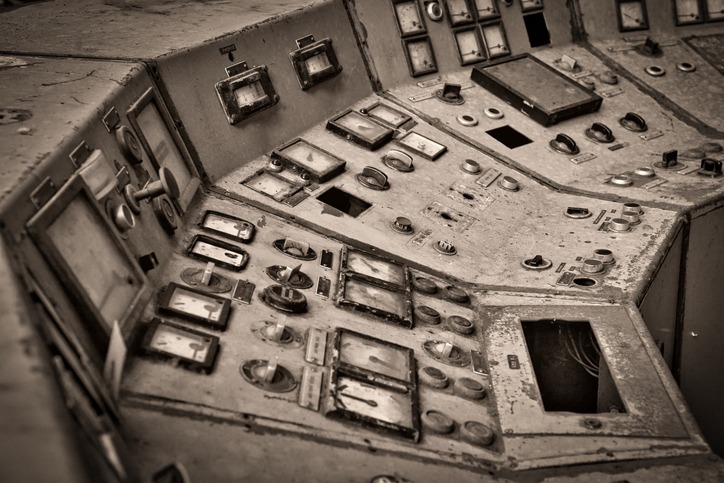
Every control system has a hidden expiration date, even though nothing on the nameplate says so. Somewhere between installation and the day it finally fails, that system quietly becomes harder to support. Most plant teams do not notice until a part cannot be found, a call goes unanswered, or a drawing is missing. Discontinued components, limited OEM support, as well as aging documentation all add up to real operational risk. This article examines how control system obsolescence risk builds, and how plant teams can plan modernization before a failure forces the decision. Along the way, it covers the warning signs to watch for, the real costs involved, and the paths toward modernization.
Every Control System Eventually Experiences Obsolescence
Obsolescence begins when a manufacturer stops producing, supporting, or updating a part the plant still relies on. The equipment can keep running for years after that point, which is exactly why the risk is so easy to overlook. This kind of risk affects new projects and long-established plants alike. The real damage appears later, once a replacement part or a knowledgeable technician cannot be found in time.
Obsolescence Puts Pressure on Three Areas of a Control System
Obsolescence rarely shows up as one single problem. Parts, support, and knowledge tend to decline together, not one at a time.
Spare Parts Become Harder to Find
Spare parts are usually the first sign anyone notices on the plant floor. Typical examples include batteries, power supplies, processor modules, I/O cards, and HMI displays. Many manufacturers keep these parts available for years, but not forever. Once that window closes, genuine parts become harder to find, ship more slowly, and cost more.
- Lead times stretch as remaining stock shrinks.
- Prices climb as demand outpaces supply.
- Plants turn to secondary markets of uncertain quality.
- Counterfeit or mismatched parts become a real risk.
Some plants have had to search unreliable secondhand markets for parts once a supplier stopped production and support. That kind of gap can cause shutdowns lasting several days before a plant finally modernizes its controls.
OEM Support Fades Away Over Time
Spare parts are only half the story, since OEM support covers far more than hardware. Full support usually means firmware updates, troubleshooting help, and access to trained technicians. As a platform ages, that support narrows, sometimes to a phone line, sometimes to nothing at all.
- Firmware updates and security patches stop arriving.
- Technical support response times grow longer.
- Replacement components require special requests or custom orders.
- Older communication methods lack modern security protections.
This gap also makes unpatched systems easier targets for cyber threats.
Documentation and Expertise Slip Away Quietly
The least visible risk of all is the slow disappearance of documentation and expertise. Wiring diagrams, logic files, and configuration notes often end up on outdated computers or nowhere at all. The engineers who commissioned the original system may retire long before they write that knowledge down.
- Drawings and logic files scattered across old formats or lost entirely
- Specialized knowledge held by only one or two people
- No formal handover process in place before key staff retire
Without that knowledge, a routine repair can turn into a lengthy investigation.
Obsolescence Carries Real Costs for a Plant
These three pressures rarely stay separate for long, since one tends to accelerate the others. Emergency sourcing and rush shipping push costs well above a normal maintenance budget. An aging platform can also block a plant from adopting modern monitoring and analytics tools.
- Longer, costlier unplanned downtime.
- Emergency sourcing and rush shipping fees.
- Cybersecurity gaps that can no longer be patched.
- Limited ability to adopt modern monitoring tools.
- Fading institutional knowledge as specialists retire.
Check Whether Your System Is Aging Well
Use the comparison below as a quick, informal health check for your own system.
| Aspect | Aging Well | Showing Warning Signs |
| OEM Support | Active updates and responsive help | Support is slow, limited, or gone entirely |
| Spare Parts | Available quickly from authorized channels | Sourced mainly from resellers or salvage |
| Documentation | Drawings and logic current and on file | Records outdated, scattered, or missing |
| Cybersecurity | Receives regular security patches | Known gaps that can no longer be fixed |
| Specialist Knowledge | Shared across a stable, trained team | Held by a few people nearing retirement |
| Data and Integration | Feeds modern monitoring and analytics tools | Isolated, with little modern connectivity |
A system with several checks in the right column is not an emergency yet, but it is a warning worth acting on.
Charting a Path to Modernization
Once the warning signs are clear, a plant generally has two broad paths forward.
Replacing the Control System Outright Removes Obsolescence Risk at Once
- Eliminates obsolescence risk in a single project.
- Requires a larger upfront budget.
- Usually means a longer planned outage.
Modernizing in Phases Spreads Out Control System Obsolescence Risk and the Cost
Many manufacturers now support phased migration, allowing legacy equipment to keep running while individual components are modernized over time.
- Spreads cost across multiple budget cycles.
- Keeps production running throughout the transition.
- Allows some hardware to be upgraded without touching existing wiring.
Some modernization designs separate the processing hardware from the field wiring, so processors can be upgraded without disturbing existing connections.
Building Your Modernization Roadmap
Whichever path fits, a clear roadmap turns obsolescence from a surprise into a scheduled project.
- Inventory every critical component and record its current lifecycle status.
- Sort components into tiers based on criticality and how easily each could be replaced.
- Request official end-of-life and last-time-buy notices from each OEM.
- Capture documentation and specialist knowledge while the people who hold it are still on staff.
- Choose a full replacement or a phased migration based on budget and outage tolerance.
A documented roadmap also gives leadership a clear budget case, rather than an emergency request.
Plan the Upgrade Before It Plans Itself
Obsolescence never announces itself with a single dramatic failure. Rather, it builds quietly through shrinking parts supply, fading OEM support, and disappearing documentation. Left unmanaged, that combination eventually forces a decision on the worst possible timeline, during a failure.
At Petrotech, we help plant teams assess control system obsolescence risk and build a modernization roadmap that fits your budget and schedule. Our team can inventory critical components, flag single-source risks, and map out a practical upgrade path. Waiting for a failure to force the decision is almost always the most expensive option.
Contact us today to start planning your modernization roadmap.