

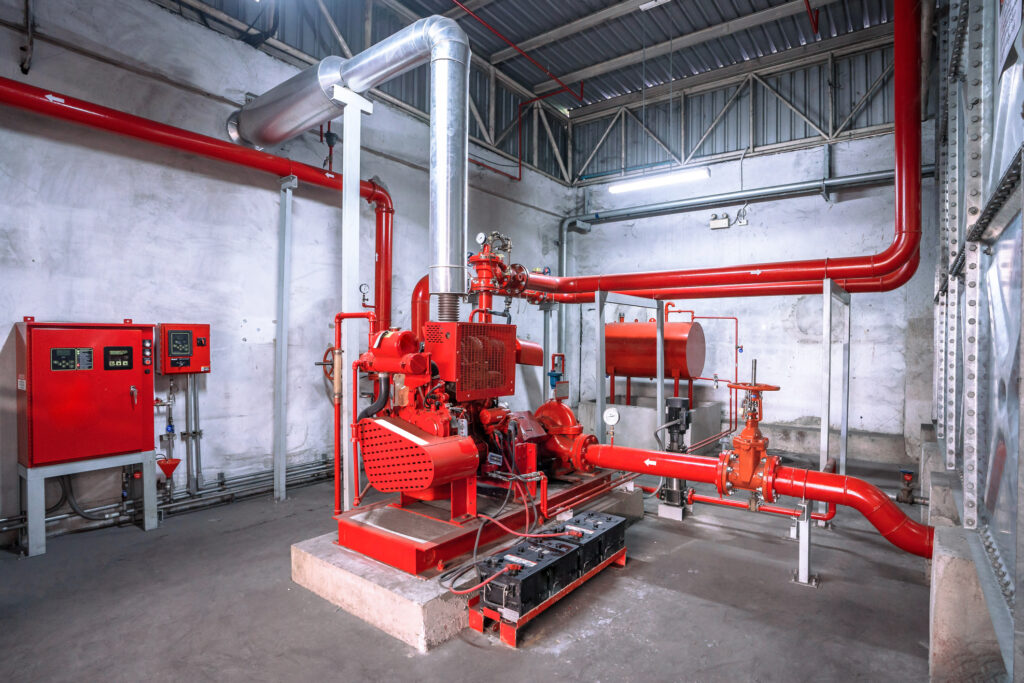
A fire water pump control system is crucial to fire suppression infrastructure, ensuring a steady and reliable water supply during emergencies. It regulates pump activation, monitors system pressure, and alerts for faults or failures. This article explores the key components, control methods, compliance with NFPA standards, and best practices for enhancing fire safety and system reliability.
Key Components of a Fire Water Pump Control System
Fire water pump control systems have several components working to provide efficient and automated fire protection. The following sections highlight key components.
Fire Pump Controllers
Fire pump controllers serve as the central command unit of fire protection systems. They automatically activate pumps in response to pressure changes to ensure reliable water flow during emergencies.
Types of Fire Pump Controllers
Electric Motor Controllers
Electric controllers, as the name implies, utilize electric motor-driven fire pumps, providing automatic start/stop functions based on pressure drops. They use solid-state logic or microprocessor-based controls to manage pump operations. These controllers are ideal for applications where grid power is reliable and include features like phase monitoring, overload protection, and emergency bypass. They also integrate seamlessly with building management systems, enabling real-time monitoring and ensuring continuous oversight of the fire suppression system.
Diesel Engine Controllers
Diesel controllers offer redundancy by using diesel engines to drive fire pumps during electrical outages. These controllers monitor critical engine parameters such as RPM, oil pressure, and coolant temperature to ensure consistent performance.
Jockey Pump Controllers
Jockey pump controllers are key to maintaining baseline pressure within the fire protection system. These controllers operate alongside the main fire pump, compensating for minor pressure drops due to small leaks or temperature changes. These controllers ensure that the system remains ready for immediate activation while optimizing efficiency and minimizing operational costs.
Functions of fire pump controllers
Start and Stop Pumps Based on Demand
Fire pump controllers automatically activate pumps when a pressure drop is detected in the fire suppression system, such as during sprinkler or hydrant use. This ensures a steady water supply to combat fires without delay. Controllers operate using signals from pressure switches or alarm devices, maintaining optimal water pressure for firefighting operations.
Monitor System Conditions
Controllers continuously monitor the performance and operational status of fire pumps. They track parameters like water pressure, motor performance, and power supply conditions to ensure optimal performance. Advanced controllers can integrate with building management systems (BMS) for centralized monitoring, providing real-time diagnostics to prevent failures.
Trigger Alarms in Case of Failures
In the event of pump malfunctions, power interruptions, or abnormal system conditions, fire pump controllers generate alarms to alert operators. These alarms can be visual or audible and are often integrated with fire panels or remote monitoring systems, allowing prompt corrective action. Fail-safe wiring ensures pumps stop automatically if control cables loosen or fail.
Pressure Sensors and Switches
Pressure sensors and switches detect changes in water pressure and activate the pump when the pressure drops below a set threshold. They ensure the fire suppression system responds immediately to demand, maintaining consistent water flow during emergencies.
Types of Pressure Sensors and Switches
Fixed-Pressure Switches
Fixed-pressure switches are mechanical devices that activate or deactivate at a predetermined pressure threshold. When water pressure drops below the set point, the switch signals the fire pump to start. These switches operate on a simple on/off mechanism, making them highly reliable with minimal maintenance. Since they lack sensitivity to gradual pressure changes, they are best suited for systems with basic fail-safe operation. Their rugged design ensures durability in harsh environments, and they do not require external power or complex calibration.
Variable-Pressure Transducers
Variable-pressure transducers measure real-time pressure changes and convert them into precise electrical signals. These signals allow the fire pump controller to adjust pump speed dynamically, optimizing performance under varying demand. Unlike fixed switches, transducers provide continuous feedback, thus reducing unnecessary pump cycling and improving energy efficiency. They are ideal for advanced fire protection systems where fine-tuned pressure control is critical. While they require proper calibration and power, their enhanced accuracy and responsiveness make them a superior choice for modern, high-efficiency systems.
Motor Starters
Motor starters control the electrical supply to fire pump motors, ensuring smooth operation and protecting the motor from damage during startup.
Functions of Motor Starters
- Power Control: Regulate electricity supplied to pump motors during startup and operation.
- Overload Protection: Prevent motor damage by cutting power during excessive current draw or overheating.
- Smooth Operation: Reduce mechanical stress on pumps by controlling acceleration rates.
Types of Motor Starters
Across-the-Line Starters
These starters provide full voltage directly to the motor, enabling rapid startup with maximum torque. While effective for smaller pumps, they can cause high inrush currents that stress electrical systems in larger setups.
Reduced-Voltage Starters
Reduced-voltage starters limit the initial current supplied to the motor, gradually increasing it until full speed is reached. This method reduces mechanical stress on pump components and is ideal for medium-sized motors.
Soft Starters
Soft starters use solid-state electronics to control acceleration smoothly, minimizing electrical surges and mechanical wear during startup. They are ideal for large motors or systems prone to water hammer effects.
Alarm and Monitoring Systems
Alarm and monitoring systems provide real-time updates on the status of fire pumps. Thus ensuring system readiness and enabling quick responses to faults.
Integration with Fire Panels
Alarm and monitoring systems seamlessly connect to building fire alarm panels, enabling centralized supervision of fire pump operations. They display real-time system status, including whether the pump is running, current pressure levels, and any detected faults. This integration enables operators to monitor system conditions from a single location, hence simplifying oversight and improving emergency response times.
Automated Alerts and Notifications
These systems generate automated alerts for critical issues such as low water pressure, power failures, or pump malfunctions. For example, they detect pressure drops or power loss, triggering backups to ensure continuous fire suppression system performance during emergencies. Notifications are delivered through lights, alarms, or digital alerts like email, ensuring operators are promptly informed of abnormalities.

Control Methods for Fire Water Pump System: Automatic vs. Manual Operation
A fire water pump control system operates in two distinct modes: automatic and manual, providing rapid emergency response and operational flexibility.
| Aspect | Automatic Control | Manual Control |
| Activation Method | Triggered by pressure switches that detect low pressure automatically. | Activated manually by authorized personnel using local switches or control panels. |
| Response Time | Immediate response to pressure drops, ensuring rapid water supply during emergencies. | Requires human intervention, which may delay activation during emergencies. |
| Use Case | Ideal for high-risk environments such as hospitals, data centers, and industrial facilities where instant response is critical. | Commonly used during maintenance, testing, or troubleshooting scenarios. |
| Reliability | Eliminates reliance on human intervention, reduces error, as well as ensures consistent operation. | Provides redundancy and also ensures pump operation if automatic systems fail. |
| NFPA Compliance | NFPA standards mandate automatic operation as the primary mode for most fire protection systems. | NFPA standards require manual override capabilities for redundancy and flexibility. |
System Integration and Compliance
Modern fire pump controllers seamlessly integrate both automatic and manual modes while maintaining NFPA compliance. Automatic mode guarantees immediate response during emergencies, while manual control allows operator intervention during maintenance or unexpected system issues. This dual-mode approach ensures reliable fire protection, accommodates maintenance needs, and also provides emergency overrides.
Fire Water Pump Control System Compliance with NFPA Standards
Fire water pump control systems must adhere to stringent guidelines set by the National Fire Protection Association (NFPA). Adherence ensures safety, reliability, and optimal performance during emergencies.
NFPA 20: Standard for the Installation of Stationary Pumps for Fire Protection
The NFPA 20 establishes the basic requirements for installing and designing fire pump systems.
- Performance: Pumps must deliver 150% of rated flow, at least 65% of rated pressure. Static pressure should stay within 101–140% of the idle rating.
- Construction: Only UL 448 or FM 1311/1371 certified pumps made from corrosion-resistant materials are permitted. Common types include split-case, end-suction, and vertical turbines.
- Backup Power: Electric pumps must be connected before the building’s main disconnect. Diesel pumps require two independent battery banks.
NFPA 25: Standard for the Inspection, Testing, and Maintenance of Water-Based Fire Protection Systems
The NFPA 25 ensures fire pump systems remain reliable through regular inspections and servicing.
- Weekly Checks: Simple checks of power availability, valve positions, and controller status help catch problems early.
- Annual Flow Tests: Complete performance tests measure how pumps function under different conditions (normal flow, high flow, and no-flow situations).
- Component Lubrication: Bearings and seals must be serviced to prevent overheating or leaks.
NFPA 72: National Fire Alarm and Signaling Code
NFPA 72 governs how fire pump alarms integrate with broader building safety systems.
- Real-Time Monitoring: Controllers must relay status updates (e.g., pump running, pressure levels) to fire alarm panels. Cloud-based systems enable remote diagnostics and alerts via SMS/email.
- Warning Systems: If something goes wrong, the system must provide clear alerts—both audible (at least 90 decibels) and visual (strobe lights).
Benefits of NFPA Standards
Compliance with NFPA standards offers numerous benefits, from enhanced safety to legal and operational advantages.
Legal Protection
- Avoid Fines and Liability: Compliance with NFPA standards ensures adherence to fire safety codes, reducing the risk of penalties from regulatory authorities and liability issues.
- Insurance Benefits: Meeting NFPA requirements can lower insurance premiums and prevent complications during claims due to non-compliance.
Enhanced Equipment Longevity
- Prolonged Service Life: Regular maintenance as outlined in NFPA 25, can extend the lifespan of fire pump systems. This includes routine inspections, lubrication, and performance testing to prevent wear and tear.
- Reduced Downtime: Proper upkeep minimizes failures, ensuring uninterrupted operation during emergencies.
Improved System Reliability
- Operational Readiness: Adherance to NFPA 20 ensures fire pumps are tested and maintained regularly, guaranteeing their reliability during critical moments.
- High-Rise Building Adaptations: New NFPA rules for high-rise buildings improve fire pump designs, thus ensuring reliable operation under challenging conditions.
Best Practices for Fire Pump Control System Maintenance
| Maintenance Category | Frequency | Key Activities | NFPA Reference |
| Routine Inspections | Weekly | Inspect electrical connections for corrosion or loose wiring.Verify sensor calibration for accurate pressure readings.Conduct a visual inspection of the pump room condition. | NFPA 20, NFPA 25 |
| Operational Testing | Weekly/Monthly | Run the diesel pump for a minimum of 30 minutes weekly.Run the electric pump for 10 minutes monthly. Verify proper start sequencing.Check for unusual noise, vibration, or overheating.Record pressure readings during operation. | NFPA 25 |
| Electrical System Maintenance | Quarterly | Inspect electrical connections for tightness.Check for corrosion or damage.Test circuit breakers and disconnect switches.Verify power source reliability. | NFPA 20, NFPA 70 |
| Battery and Power Supply Maintenance | Quarterly | Inspect diesel generator backups for readiness. Ensure uninterrupted power supply (UPS) functionality for electronic controllers.Test diesel fuel annually to prevent degradation. | NFPA 20 |
| Lubrication and Component Checks | Quarterly | Lubricate bearings, couplings, and moving parts to prevent overheating and wear. Check for leaks or discharges in piping systems.Align pump couplings as needed. | NFPA 20 |
| Software and Firmware Updates | As Released | Apply security patches.Update control logic as standards evolve.Document all software changes.Verify system operation after updates. Include remote diagnostics where applicable. | NFPA 20,NFPA 72 |
| Performance Testing | Annually | Conduct annual flow tests under churn (0%), rated flow (100%), and overload (150%) conditions to validate pump operation under full load.Confirm pressure gauge accuracy and system discharge rates.Document and trend performance metrics. | NFPA 20, NFPA 25 |
| Environmental Safeguards | Quarterly | Maintain pump room temperatures above freezing (minimum 40°F). Check ventilation for diesel engines.Protect components from dust, moisture, and corrosion. | NFPA 20 |
| Recordkeeping | After Each Maintenance | Log all maintenance activities, including inspection results, test data, and repairs, to ensure compliance with NFPA standards. | NFPA 25 |
Fire Water Pump Control Systems at Petrotech
Fire water pump control systems are the backbone of effective fire suppression, ensuring reliable water delivery during emergencies. From automatic and manual operation modes to compliance with NFPA standards, these systems integrate advanced technologies and robust designs to safeguard lives and property. Regular maintenance is essential to keep these systems in peak condition and ready for action.
At Petrotech, we understand the important role of fire water pump control systems in fire safety. Whether you need assistance with design, installation, or compliance with NFPA standards, our team of experts is here to help. Contact us today to discuss your fire water pump system needs.