
When a turbine trips at two in the morning, the first call often goes to a vendor a thousand miles away. That call reveals an uncomfortable truth: many operators do not fully control the equipment running their own plant. For decades, control systems built to run that equipment came locked to one vendor, hardware and software sold together. This article explains how open-architecture control systems help operators reduce vendor lock-in, simplify future upgrades, improve serviceability, and maintain long-term control over critical turbomachinery. What follows explains how that dependence forms, what open architecture offers instead, and where it still falls short. By the end, one question should be easy to answer: who actually controls your plant?
Why Turbomachinery Control Has Traditionally Been Proprietary
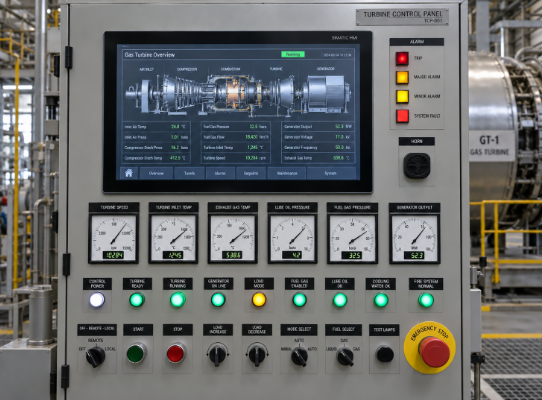
Turbomachinery demands fast, precise control. Compressors and turbines can require responses within milliseconds to maintain safe and stable operation. To meet these demands, control vendors traditionally built proprietary hardware, software, and engineering tools as one integrated system. This approach delivered strong performance and reliability, but it also tied the plant closely to the original vendor. With many systems remaining in service for 20 years or more, that dependency can become a challenge. This is true when parts, software, expertise, or modernization options are no longer readily available.
What Are The Long-Term Challenges of a Proprietary Platform
Over the life of a turbomachinery installation, dependence on a single control system vendor can affect:
- Maintenance: Replacement hardware may be available only through the original supplier, particularly as components become obsolete.
- Software support: System upgrades, cybersecurity updates, and engineering tools may depend on the vendor’s product lifecycle.
- Skills and training: Maintenance teams may require specialized knowledge of a particular vendor’s hardware and software.
- System integration: Connecting modern monitoring, analytics, and other third-party technologies can be more difficult with a closed architecture.
- Modernization: When an aging platform reaches the end of its support life, upgrading the control system can become a major project rather than a targeted improvement.
The result is that a control system selected for a piece of equipment can influence how that equipment is maintained, upgraded, and integrated for decades.
Open Architecture: A More Flexible Approach to Turbomachinery Control
Open architecture changes how a plant approaches its control system. Instead of locking the entire system to one manufacturer’s hardware and software, it uses standard interfaces and modular components that can work across different suppliers. For plant operators, this is more than a technical design choice. It can provide greater flexibility when selecting equipment, maintaining the system, adding new technologies, and planning for the long term.
What Does Open Architecture Look Like?
An open control system typically uses:
- Multi-vendor hardware: Qualified components can be sourced from different suppliers rather than a single manufacturer.
- Standard communication: Protocols such as Modbus and OPC make it easier for systems and devices to exchange information.
- Widely used engineering tools: Standard programming environments reduce dependence on proprietary engineering skills.
- Modular design: Individual components can be upgraded, replaced, or expanded without necessarily replacing the entire control system.
Four Practical Benefits of Open Architecture
Open architecture is valuable because it gives plants more flexibility over how their control systems are sourced, maintained, and upgraded.
1. More Choice and Greater Vendor Leverage
When a control system is not dependent on a single supplier, plants have more freedom to compare vendors for hardware, services, and support.
This can improve:
- Procurement flexibility
- Pricing and contract negotiations
- Access to alternative service providers
- Response to support and maintenance needs
2. Upgrades Without Replacing Everything
A modular control system allows individual components to be upgraded or replaced as technology changes. Instead of waiting for an entire platform to become obsolete, plants can modernize selectively, helping to reduce:
- Upgrade costs
- Planned downtime
- Project complexity
- Disruption to production
3. Less Dependence on Specialized Vendor Support
Open standards and widely used engineering tools make it easier for plant engineers and independent specialists to understand, troubleshoot, and maintain the system. Routine maintenance does not have to depend entirely on one vendor’s technicians or proprietary expertise.
4. Greater Control Over the System’s Future
A control system can remain in service for decades. Open architecture gives the plant greater freedom to decide when and how that system evolves.
Open Architecture Is Not Without Trade-Offs
Having open architecture controls offers greater flexibility, but it is not automatically the best solution for every turbomachinery application. Some applications, particularly high-speed surge protection and other highly time-critical functions, have traditionally relied on purpose-built proprietary controllers. While modern open platforms have significantly improved their performance, application requirements still require careful evaluation.
There are also practical considerations when moving to an open architecture:
- Integration: Migration requires engineering, testing, and commissioning, which can involve upfront cost and effort.
- Skills: Plant teams may need training on new programming tools, standards, and system architectures.
- Legacy equipment: Older components may not have direct, drop-in replacements on modern open platforms.
The question is therefore not simply whether open or proprietary control is better. The real question is which approach gives the plant the right balance of performance, reliability, flexibility, and lifecycle cost.
Open vs Proprietary: What Changes for the Plant?
| Consideration | Proprietary Architecture | Open Architecture |
| Vendor dependence | Primarily dependent on one supplier | Multiple qualified suppliers can be considered |
| Hardware | Vendor-specific components | Standardized, widely available components |
| Upgrades | May require major platform replacement | Components can often be upgraded independently |
| Maintenance | Greater reliance on vendor-specific expertise | More opportunity for in-house and third-party support |
| Integration | Integration may be limited by proprietary interfaces | Easier integration through standard interfaces and protocols |
| Initial transition cost | Lower when maintaining the existing platform | May require upfront engineering and integration investment |
| Long-term flexibility | Constrained by the vendor’s product lifecycle | Greater freedom to evolve the system over time |
For plants operating critical equipment for decades, the decision should consider not only how the control system performs today, but how easy future maintenance, upgrades, and support would be.
Deciding Whether Open Architecture Fits Your Plant
A shift to open architecture works best as a planned evaluation, not a rushed decision.
- List every proprietary component currently tied to a single vendor.
- Identify which of those components are nearing end of life or obsolescence.
- Ask vendors directly whether their systems support open standards and third-party hardware.
- Weigh the integration cost against the long term cost of staying locked in.
- Pilot open architecture on a single unit before committing to a full rollout.
A phased evaluation lets a plant test the benefits without risking its most critical equipment.
Take Back Control of Your Turbomachinery’s Future
Open architecture is not simply a technical upgrade; it is a shift in who holds control. It gives plant teams more leverage, simpler upgrades, easier service, and lasting control over critical equipment. Staying with a closed system is still a choice, but it should be made deliberately, not by default. The plants that act now will set the terms of that decision. The ones that wait will have it set for them.
At Petrotech, we help operators evaluate open architecture options for turbomachinery control systems and plan a practical transition. Our team can assess your current architecture, flag vendor lock-in risks, and design an upgrade path that fits your equipment. The right architecture decision now can protect your plant’s flexibility, budget, and independence for decades to come.
Contact us today to start taking back control of your turbomachinery’s future.