
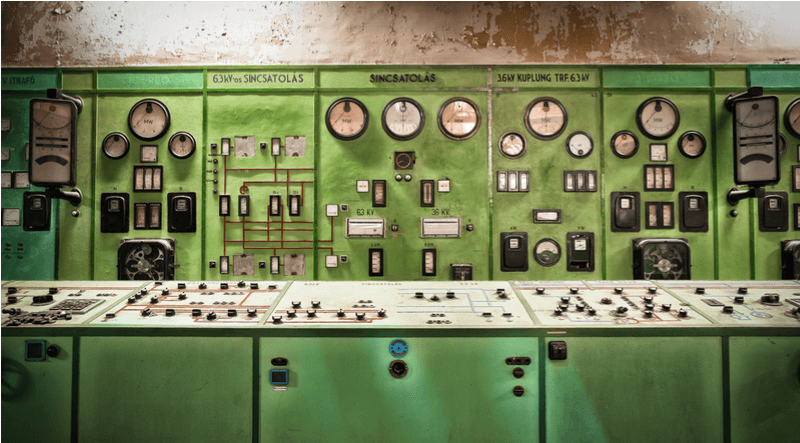
A facility that is producing is not necessarily safe. Across the petrochemical sector, thousands of turbines are being managed by control systems so outdated that their original manufacturers no longer support them, yet operational continuity is mistaken for operational confidence. That distinction is where the exposure lives. This article examines the hidden liabilities of legacy turbine control systems. It also looks at how those risks compound over time and what a structured modernization program actually delivers in terms of uptime, safety, and compliance.
What “Still Running” Really Means
In many facilities, people assume that if a system is running, then everything is fine. This idea feels practical, but it can be misleading. Aging turbine control systems can operate while serious risks grow unnoticed. Systems like Distributed Control Systems (DCSs) and Programmable Logic Controllers (PLCs) may run for decades. However, long-term operation does not guarantee safety, reliability, or efficiency. Instead, it can create a false sense of security. Understanding these risks helps facilities make better decisions. It also helps teams move from reactive fixes to proactive planning.
Hardware and Software Obsolescence in Legacy Control Systems
Control systems eventually reach a point where manufacturers discontinue support. Spare parts become hard to find. Software updates are no longer available. Technical expertise becomes limited or disappears. When a critical component fails, options become limited. Facilities may search for used parts with no quality assurance. They may face long and costly shutdowns. They may depend on internal knowledge that is not documented.
This situation is not only a maintenance issue. It is a growing financial risk. Equipment failure causes a large share of unplanned downtime. In industries like oil and gas, downtime costs can exceed hundreds of thousands of dollars per hour. The longer the system stays in operation, the greater the exposure.
Legacy Control Systems Are Exposed to Modern Cyber Risks
Legacy control systems come from an era of isolated networks and proprietary communication protocols. Connecting them to corporate IT infrastructure, historian servers, or remote monitoring platforms introduces vulnerabilities their designers never anticipated. IEC 62443, the international standard for industrial automation and control system security, defines the framework that governs Operational Technology (OT) environments. Most legacy DCS and PLC platforms cannot meet their requirements for encrypted communications, role-based access controls, or audit logging.
This gap is actively being exploited. Threat actors are now targeting SCADA systems and Safety Instrumented Systems (SIS) with tools built specifically for industrial environments. The Colonial Pipeline incident in 2021 illustrated how OT exposure translates directly into production loss, regulatory scrutiny, and reputational harm. Facilities that cannot demonstrate IEC 62443 alignment are carrying unquantified OT cybersecurity risk exposure.
Performance Can Decline Without Clear Warning
A system can appear normal while performance slowly declines. This is one of the hardest risks to detect. Sensors can drift over time. Equipment condition changes with age.
Control logic often remains unchanged since installation. This creates a gap between system behavior and the actual condition of the equipment. The system still runs, but it may not perform efficiently. Operators often create manual adjustments to compensate. These workarounds are rarely documented. Important knowledge stays with individuals rather than with the system. When those individuals leave, the facility loses that knowledge.
Compliance Gaps Continue to Grow in Legacy Control Systems
Regulatory and industry standards do not stand still. IEC 61511 for functional safety and API standards for rotating equipment have been revised significantly in recent years. Legacy systems were validated against the standards in force at the time of installation, not the standards that apply today.
As frameworks evolve, the demonstrable gap between what a legacy system can show and what regulators require continues to widen. Facilities may find that their safety instrumented functions cannot be validated to current proof test intervals, or that their change management records are insufficient for a modern audit. During incident investigations, regulators and insurers examine whether control systems are reasonably fit for purpose. An unmodernized system is increasingly difficult to defend.
What Modernization Actually Delivers
Reframing modernization as an investment rather than a cost requires an honest accounting of what legacy systems are already costing. The relevant comparison is not modernization versus the status quo. It is modernization versus the compounding exposure of unplanned downtime, OT cybersecurity incidents, regulatory penalties, and accelerating maintenance spend.
Recent industry analysis on turbine modernization highlights that retrofit strategies reduce capital costs by reusing existing infrastructure and limiting installation scope. These projects can also be executed during planned maintenance windows, helping minimize production disruption and avoid extended downtime. Modern turbine control platforms deliver measurable improvements across every dimension that matters:
- Uptime and reliability: Predictive diagnostics, automated fault detection, and built-in redundancy architectures reduce both the frequency and duration of unplanned outages.
- Cybersecurity by design: Encrypted communications, multifactor authentication, and network segmentation support are foundational features of current-generation OT platforms, not retrofitted additions.
- Operational visibility: Integration with digital twin environments and real-time monitoring systems gives engineering teams data that legacy platforms are not capable of producing.
- Regulatory defensibility: Modern systems generate the audit trails, functional safety evidence, and change management records that IEC 61511 and IEC 62443 require.
- Long-term support and maintainability: Active vendor roadmaps, available spare parts, and trained support personnel protect the facility’s investment well beyond the initial upgrade.
How to Start: A Phased Approach
A structured modernization does not require a full plant shutdown or a single large capital commitment. The following process applies regardless of the facility’s scale or the legacy system’s age.
Step 1: Conduct an OT asset inventory to identify every control system component, its current support status, and its exposure to known cybersecurity vulnerabilities. This baseline is the foundation for all subsequent planning.
Step 2: Perform a risk-based assessment against current standards, including IEC 62443 and IEC 61511, to identify compliance gaps and prioritize the highest risk functions for early remediation.
Step 3: Develop a phased upgrade roadmap structured around planned maintenance intervals. This allows the most critical control functions to be addressed first without requiring extended production outages.
Step 4: Engage a system integrator with demonstrated experience in turbine control migration to manage configuration, functional testing, and commissioning on modern platforms. The human factors risk that accompanies any major system change is as important to manage as the technical risk.
Work With Petrotech
Modernizing industrial control systems is technically complex and operationally sensitive. When done poorly, it introduces new risks rather than eliminating them. Petrotech brings deep expertise in turbine control assessment, migration planning, and platform commissioning across upstream, midstream, and downstream facilities. Our services include:
- OT risk assessments: Structured evaluation of legacy systems against IEC 62443 and IEC 61511
- Modernization roadmaps: Prioritized upgrade strategies designed around your operational constraints and maintenance schedule
- System migration: Configuration, testing, and commissioning on current-generation turbine control platforms
- Compliance documentation: Functional safety evidence and audit-ready records aligned with current regulatory requirements
Contact us today to discuss your current control system architecture and modernization options.