
Executive Summary
As the energy grid evolves, the need for reliable long-duration energy storage is becoming more urgent. Solar and wind generation continue to expand, but their output does not always align with demand. Batteries help meet short-duration storage needs, but utilities, developers, and industrial operators are increasingly looking for solutions that can store energy for longer periods, support grid stability, and deliver power on demand. At Clean Currents 2025, Petrotech joined Sage Geosystems and Canyon Hydro to present an innovative pumped hydro controls concept designed to address that challenge. The presentation explored a new approach to energy storage that uses subsurface pressure as the storage medium, pairing underground energy storage with hydro-turbine technology and advanced control systems.
For Petrotech, the project demonstrates a core truth about emerging energy infrastructure: innovation depends on control. New storage concepts may begin with geology, hydraulics, and power generation, but they become operationally viable through precise sequencing, protection logic, turbine control, communication architecture, and operator visibility.
Rethinking Pumped Hydro
Traditional pumped hydro is one of the most proven forms of large-scale energy storage, as the figure below highlights.
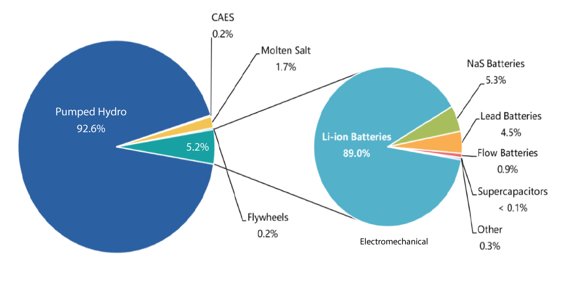
In a conventional system, water is pumped from a lower reservoir to an upper reservoir when excess power is available. Later, that water is released downhill through turbines to generate electricity.
The physics are proven. The challenge is geography.
Conventional pumped storage typically requires significant land, elevation change, water access, permitting, and large-scale civil infrastructure. These requirements can limit where projects are feasible, even as the need for long-duration storage grows.
Sage Geosystems’ approach rethinks that model. Instead of storing energy by moving water between two surface reservoirs, the system stores energy underground using subsurface pressure. In simplified terms, water is injected into a subsurface formation during the charging phase. That pressure stores energy. When electricity is needed, the pressurized water is released and routed through a turbine-generator system. This approach effectively turns pumped hydro into a subsurface storage application. It preserves the core principle of converting stored water energy into electricity, while exploring a different way to store that energy in the first place.
The Role of an Integrated System for Pumped Hydro Controls
Next-generation pumped hydro is not a single-component solution. It depends on multiple disciplines working together.
Sage Geosystems brings the subsurface energy storage concept. Canyon Hydro provides the hydro turbine technology, while Petrotech provides the controls and integration expertise needed to ensure the pumped hydro setup operates safely, predictably, and repeatably.
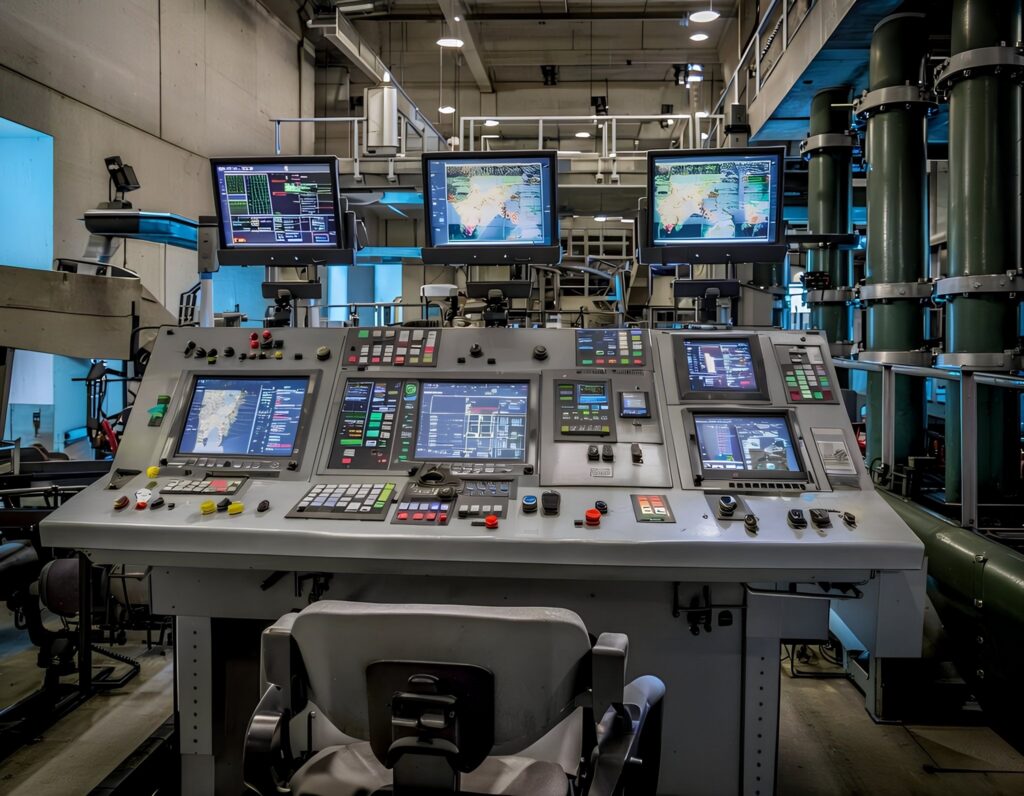
The Clean Currents presentation identifies several core control-system elements, including PLC-based control, HMI operator interface, communication with power meters, protection relays, drives, motor control centers, hardwired field I/O, and secure remote access. It also notes the use of VFD functionality to support soft starting and maintain the optimal turbine speed-to-jet velocity ratio during generation.
That controls layer is where system intent becomes system behavior. A turbine-generator system cannot simply be connected to a pressurized flow source and expected to operate safely. The control system must:
- Start correctly and safely.
- Respond to changing pressure and flow conditions.
- Protect equipment and personnel when operating limits are reached.
- Coordinate generator loading, optimal turbine speed, nozzle behavior, safety permissives, alarms, shutdown logic, and operator commands.
In other words, the control system is the operational bridge between an innovative energy storage concept and a field-ready asset.
Why Controls Matter in a Dynamic Pressure Environment
One of the defining characteristics of this type of storage system is its dynamic energy source. In a traditional hydro setting, operators may work with known head conditions, reservoir levels, and flow profiles. In a subsurface storage application, pressure and flow may change over the discharge period.
That creates a unique control challenge.
The turbine must operate safely and efficiently as conditions shift. The control system must account for pressure changes, flow behavior, speed control, generator response, and equipment protection. If the system is too rigid, performance can suffer. And if it is too permissive, equipment risk can increase. The goal is to balance responsiveness with protection.
The presentation highlights a specific strategy: using a VFD to soft-start the unit and maintain the ideal relationship between turbine speed and jet velocity during generation. This shows how controls contribute directly to performance. The system is not simply turning equipment on and off. It is actively helping the turbine operate within the right envelope as conditions evolve.
Building for Safe Startup, Shutdown, and Protection
In any turbine-generator application, startup and shutdown sequences matter. In an innovative storage application, they matter even more.
The control system must confirm that the right conditions are in place before operation begins. These may include equipment status, valve position, pressure limits, electrical readiness, communication health, permissives, and safety interlocks. Once the startup begins, the system must coordinate the transition from standby to controlled generation. During shutdown, it must return the system to a safe condition without causing unnecessary mechanical, hydraulic, or electrical stress.
Protection logic is equally important. A system like this may need to respond to abnormal pressure, overspeed, loss of communication, electrical faults, equipment trips, or operating conditions outside the approved envelope. In those moments, the control system becomes the first line of defense.
As a first-of-a-kind site with unique controls and challenges, this is where Petrotech’s experience in critical energy environments becomes especially valuable. These systems require more than software development. They require a practical understanding of how equipment behaves in the field, how operators interact with machinery, and how control logic protects both uptime and safety. In addition, proper protection requires multiple perspectives from all parties and experts involved. Each supplier was tasked to create all possible failure scenarios and required actions, and Petrotech was required to take these scenarios into account when creating the protection system.
Petrotech’s brand promise — “We build systems and controls that protect what powers our customers’ business” — aligns directly with this kind of work. The company’s purpose is to deliver confidence, performance, and control in critical energy environments.
Operator Visibility and Future Scalability of Pumped Hydro Controls
Advanced controls not only manage equipment. They also give operators confidence.
For emerging energy technologies, visibility is critical. Operators need to see system mode, alarms, pressure and flow data, turbine speed, generator status, permissives, and equipment conditions in real time. A well-designed HMI helps turn a complex process into information operators can understand and act on without being overloaded by improperly programmed alarms and displays.
The Clean Currents presentation also references secure remote access as part of the system architecture. That capability can be especially important when a project involves multiple stakeholders, including site operators, engineering teams, OEM partners, and controls specialists. Secure remote visibility can support troubleshooting, reduce unnecessary travel, and help teams make faster decisions when expertise is necessary.
Controls also play a major role in scalability. For next-generation pumped hydro to expand, the system must be repeatable. Each future site may have different subsurface conditions, turbine sizing, electrical requirements, and balance-of-plant equipment. But a thoughtful control architecture can provide a consistent foundation for sequencing, alarming, operator interface, equipment communication, and safe operation.
That repeatability is essential for utilities and developers evaluating new energy storage technologies. They need confidence that a system can move from concept to deployment without sacrificing reliability. Petrotech worked to create a universal product that Sage Geosystems can implement for prospective customers with ease, requiring little to no further engineering. The turbine controls were designed such that a single small-scale cabinet can be installed with any Canyon-designed Pelton turbine on any Sage-developed site. The remaining engineering effort would be due to the different conditions that come with the site infrastructure in the Balance of Plant controls. These design considerations allow the emerging sciences to take center stage on new sites while the control system works efficiently in the background.
Control Is What Makes Innovation Operable
The Clean Currents presentation highlighted an important step forward in long-duration energy storage. By combining Sage Geosystems’ subsurface energy storage concept, Canyon Hydro’s turbine technology, and Petrotech’s controls expertise, the pumped hydro project demonstrates how established engineering disciplines can converge in new ways to support grid reliability.
The concept is innovative, but its success depends on practical execution. Pressurized subsurface storage must be managed. Turbine behavior must be controlled. Generator operation must be coordinated. Operators must have visibility. Equipment must be protected. The system must respond predictably as conditions change.
That is the role of advanced controls.
For Petrotech, this project is more than a trade show presentation. It is an example of Petrotech’s value in the future of energy: building the systems and controls that protect the systems that power customers’ businesses, even as the definition of power generation and storage continues to evolve.
As the energy industry searches for reliable, scalable, long-duration storage, one thing is clear: the next generation of grid infrastructure will require more than new ideas. It will require controls that make those ideas work safely, efficiently, and repeatedly in the field.